
War and climate war
When two scare stories converge...

Over at the Daily Sceptic, my colleague Chris Morrison reveals “British Intelligence Goes Full Guardian Promoting Untestable Computer-Generated Scares of Eco-System Collapse”.
Conspiracy nuts have had a field day over the delayed release of work compiled by the British Intelligence Services warning of possible eco-collapse, mass extinctions, food shortages, conflicts and mass migration. In fact, the flimsy 14-page report is little more than a cutting job from the Guardian. Twenty-six mostly usual suspect sources are named, and highlights of the most extreme scenarios are cherry-picked in yet another Net Zero Blob effort to create population panic. Who knows how much taxpayer money was wasted on this compilation – AI could have done the job in under a minute. The obvious reason for the delay in publication was that someone intelligent in the Intelligence Services said something along the lines: ‘We can’t publish this BS, we will look complete idiots.’
Chris nails it, of course. But The Times’ exposé reminded me of something.
Described as a “reasonable worst-case scenario”, the report said that many ecosystems around the world were so stressed that they could soon pass a tipping point, after which they would inexorably degrade no matter what humans did to protect them. Forests in Canada and Russia might pass a tipping point by 2030, as might glaciers in the Himalayas that fed rivers on which two billion people depended, the report suggested.
Intelligence chiefs warned that the decline of Himalayan rivers would “almost certainly escalate tensions” between China, India and Pakistan, potentially leading to nuclear war.
Then I remembered… Waaaaaay back in 2004, The Observer — aka the Sunday Guardian — revealed:
Now the Pentagon tells Bush: climate change will destroy us
· Secret report warns of rioting and nuclear war
· Britain will be ‘Siberian’ in less than 20 years
· Threat to the world is greater than terrorism
I know that greens are fans of recycling. But this takes the proverbial. Anyway. I checked. It wasn’t difficult. 21 years on from the “secret” Pentagon report, I was worried that I might have been snowed in.
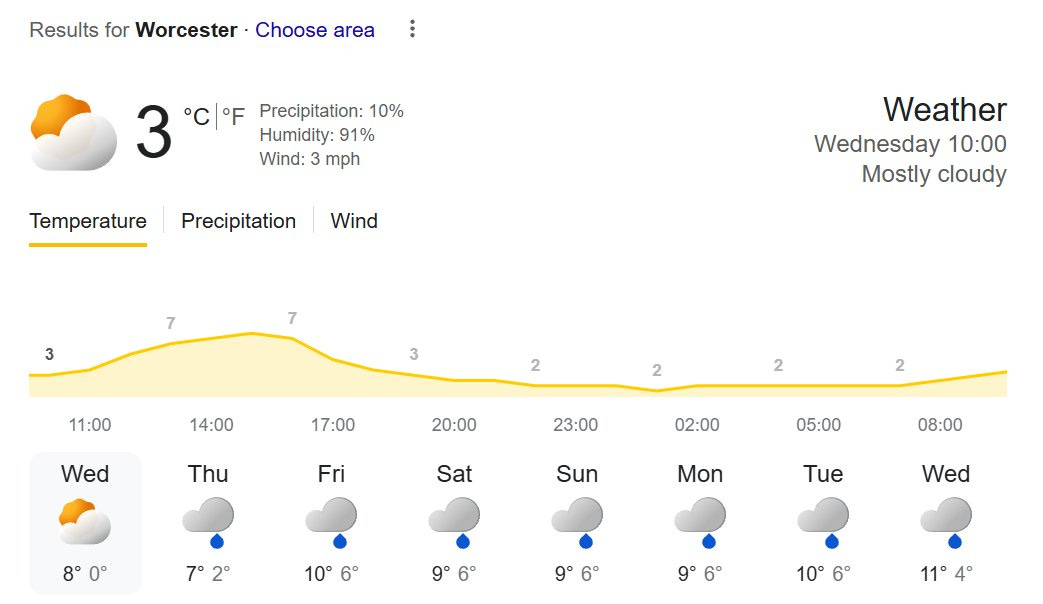
Phew!
But what was it like in Siberia?
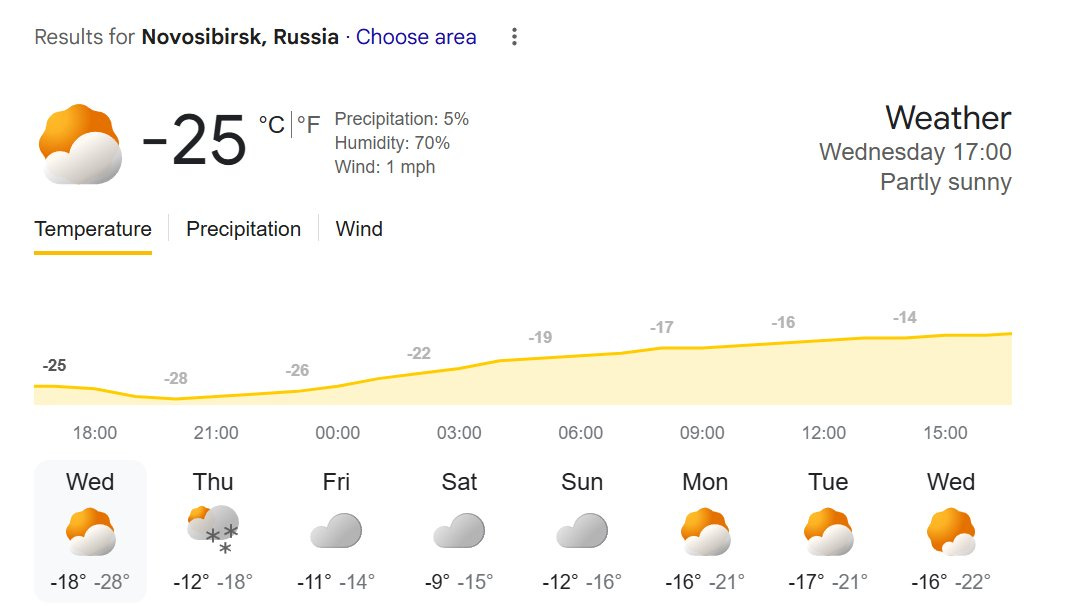
Brrrrrr! 26 degrees colder.
Some more comparisons are called for, then…
Here’s The Times in 2026:
Ministers suppressed a report after intelligence chiefs warned that climate change could drive mass migration to Britain and trigger a nuclear war in Asia.
The study, entitled Global Biodiversity Loss, Ecosystem Collapse and National Security, was put together with the help of the joint intelligence committee, which oversees MI5 and MI6.
Initially due to be published last autumn, it was blocked by No 10 for being too negative.
And here’s the Guardian in 2004.
A secret report, suppressed by US defence chiefs and obtained by The Observer, warns that major European cities will be sunk beneath rising seas as Britain is plunged into a ‘Siberian’ climate by 2020. Nuclear conflict, mega-droughts, famine and widespread rioting will erupt across the world.
In both cases, a “secret report” compiled by security experts has been “leaked”, seemingly because governments really don’t want you to know how bad things are.
In both cases, then, we can rightly assume that the “secrecy” and the attempts to “supress” the findings are no more truthful than the contents of the “report”. Indeed, they are performances.
If they — or at least the latter report — are not performances, then things are indeed far worse than we thought. And that’s because the UK agencies’ 2026 report might just as well have been written in 2004.
Consider the concern for the “glaciers in the Himalayas that fed rivers on which two billion people depended”. This is a very long-since debunked claim. It is monsoon systems — Indian and Eastern — that bring most of the water to countries either side and straddling the Himalayas, not melting ice. And there remain very many glaciers, which, despite their status as symbols of global warming, are much more robust than climate alarmists want them to be. Their refusal to disappear are a source of much more disappointment than water. After all, if they didn’t melt, then there would be no water.
Peak glacier alarmism occurred in the 2000s. But in 2010, it erupted into a controversy dubbed “Himalayagate”.
The problem began in a 1999 article in the New Scientist, by Guardian (of course) journalist and water-worrier, Fred Pearce. As was later revealed, the claim was completely unfounded.
“All the glaciers in the middle Himalayas are retreating,” says Syed Hasnain of Jawaharlal Nehru University in Delhi, the chief author of the ICSI report. A typical example is the Gangorti glacier at the head of the River Ganges, which is retreating at a rate of 30 metres per year. Hasnain’s four-year study indicates that all the glaciers in the central and eastern Himalayas could disappear by 2035 at their present rate of decline.
Greens being what they are — incurious, credulous, and lacking substance between the ears — they have a habit of picking up on such alarming factoids. That’s because greens do not want to persuade you with careful analysis. They prefer emotional blackmail: don’t you care about the billions of people who are going to be denied water by 2035?!! And they confuse such nuggets with unimpeachable “science”. Claims such as this are thus like gold nuggets, which greens collect. And sure enough, the claim made its way into a 2005 WWF report, which now carries a correction on the front matter:
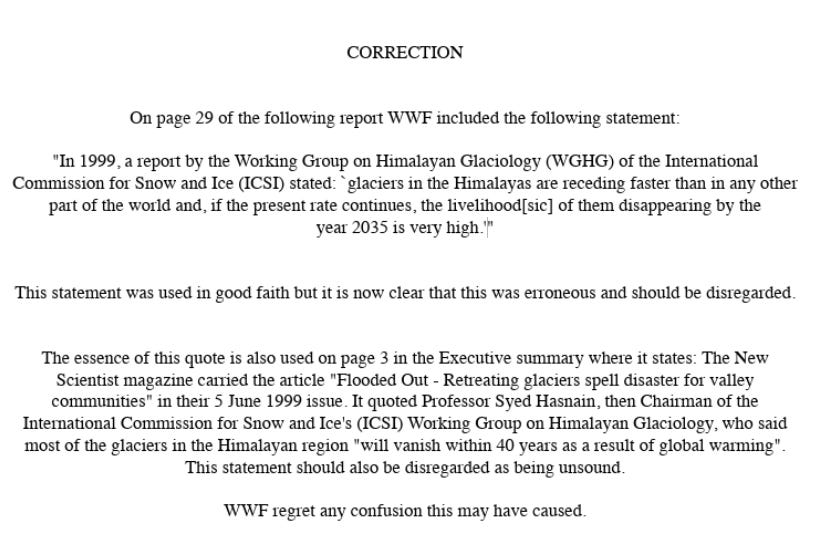
But that addition was too late. And this is where this game of climate alarmist Chinese Whispers claimed its major victim: the IPCC.
The WWF report made its way into the 2007 IPCC Assessments Report, section 10.6.2 of WGII:
Glaciers in the Himalaya are receding faster than in any other part of the world (see Table 10.9) and, if the present rate continues, the likelihood of them disappearing by the year 2035 and perhaps sooner is very high if the Earth keeps warming at the current rate. Its total area will likely shrink from the present 500,000 to 100,000 km2 by the year 2035 (WWF, 2005).
It was the government of India that, in 2009, objected to the claims, and issued the corrections in its own assessment of Himalayan glaciers. In a Guardian article from the time, Jairam Ramesh, India’s environment minister is quoted as saying, on the basis of the report, “There is no conclusive scientific evidence to link global warming with what is happening in the Himalayan glaciers” — a claim that upset many, including the Guardian and the IPCC itself. The IPCC’s chief, the late Rajendra Pachauri had, since the error had been pointed out, been on the offensive, calling Ramesh “arrogant”, and later accusing the report of being “voodoo science”. But over the next year, Pachauri was forced to concede that the Indian government’s analysis probably had more science behind it than did the WWF and Fred Pearce’s alarmism. In early 2010, the IPCC issued a statement that declared:
It has, however, recently come to our attention that a paragraph in the 938 page Working Group II contribution to the underlying assessment2 refers to poorly substantiated estimates of rate of recession and date for the disappearance of Himalayan glaciers. In drafting the paragraph in question, the clear and well-established standards of evidence, required by the IPCC procedures, were not applied properly.
Amid speculation about who or what had misinformed whom, and whether 2035 was an anagram of 2350, Fred Pearce held is ground, stating in the Independent “I wrote the offending article. I stand by it”.
That's what Hasnain told me. He was the authority, I was the humble scribe. But my trust that scientists work to higher standards than journalists is dented. And perhaps our old stories should go back to wrapping fish and chips.
But therein lay the problem. A scientist said it to a journalist. But even if we give him the benefit of the doubt, the journalist apparently had no curiosity about what he had been told. But there exists an even darker and dafter dimension. Pearce was no beat reporter.
In 1982, he wrote Watershed: Collapse of Britain’s Water Supply.
In 1992, he wrote The Dammed: Rivers, Dams and the Coming World Water Crisis.
In 2006, he wrote When the Rivers Run Dry: Journeys Into the Heart of the World’s Water Crisis.
His bibliography is manifestly alarmist. And a central theme of that work, spanning now five decades, is the “water crisis”. The writer, I suggest, went to a “scientist” — in quotes because I don’t believe that the writer cared for the science — because he knew what he would be told; he was not interested in testing his own thesis, or his own claims. He just wanted the quote he needed to make his New Scientist — which is, after all a publication that long ago ceased being either “new” or about “science” — piece seemingly stand up.
The problem of such shoddy work was ubiquitous. And the audit of the IPCC’s dependence on “grey literature” — poorly evidenced reports from NGOs — began. My own contribution (work that I’d done with my writing colleague, Stuart Blackman for our Climate Resistance Blog in 2008) was summarised in my guest post at Roger Pielke Jr’s old blog. The same WGII IPCC report had declared that
In other [African] countries, additional risks that could be exacerbated by climate change include greater erosion, deficiencies in yields from rain-fed agriculture of up to 50% during the 2000-2020 period, and reductions in crop growth period (Agoumi, 2003). [IPCC WGII, Page 448. 9.4.4]
But Agoumi 2003 was not a peer-reviewed study. It was a report published by The International Institute for Sustainable Development — the agenda of which needs no further explanation. The science was even more abysmal. And yet the IPCC had absorbed it, all the same, to make a claim about an entire continent’s vulnerabilities to climate change, which had thereby magicked pure bullshit into “the scientific consensus”.
Others found similarly. Shortly after in that year, Donna Laframboise’s crowdsourcing audit of the IPCC discovered that a shocking 34% of the studies cited by IPCC WGII were “grey”. And it was even worse for WGIII!
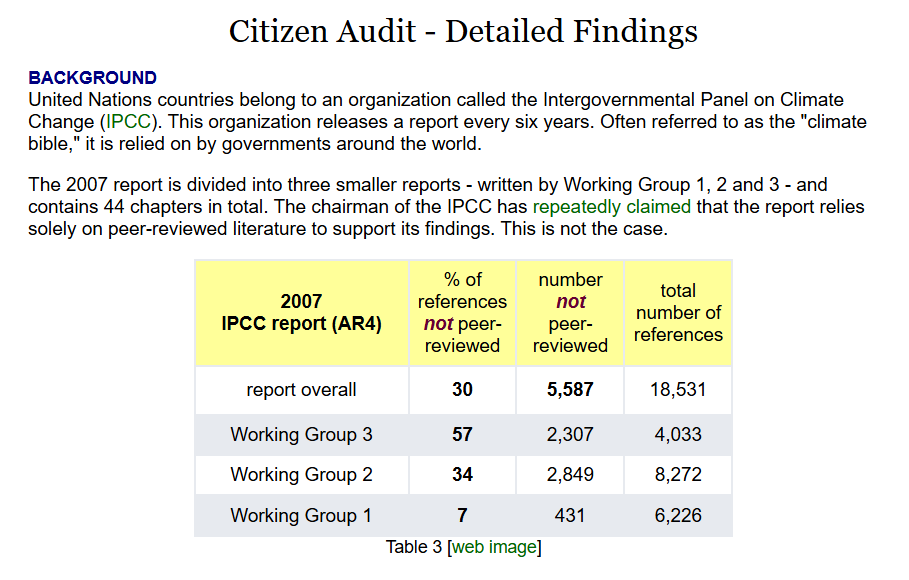
So why this long discussion about climate controversies from the 2000s?
Well, if the spooks that put their “leaked” report together knew anything at all about their subject, they would know just how terrible this crisis was for the climate movement. (It was so bad, in fact, that the Guardian were shocked into asking me for a brief comment piece on it — published here.) They would know that the Pentagon tried this, and 2 decades on, all of it was revealed to be extremely silly. And they would not be reproducing such thoroughly debunked claims from 20 or more years ago. And if they did know anything about their subject, then their secrecy is explained: they didn’t want anyone to know how crap their work is.
I have long been sceptical about the political establishment’s claims underpinning both environmental and foreign policy. If this “secret report” is any indication of the quality of the inner workings of the machinery of the state, then they have diminished even further in my estimation. It’s worse than we thought: catastrophically stupid people really are running the show.
Brilliant takedown of institutional memory loss. The fact that spooks are recycling Himalayagate claims two decades later says everything about how insulated these agencies are from their own failures. The 34% grey literature dependency you cite from Laframboise's audit was absolutely shocking at thetime. What's worse is that this kind of circular citation laundering is basicaly standard practice now across policy domains, not just climate.
A little known fact.
The WWF report was reported by New Scientist, and Dr David Bellamy wrote in to New Scientist to the say it was nonsense. This resulted in George Monbiot attacking David, starting a climate denier witch-hunt and getting him cancelled. If George had show a little more journalism vs climate activism. David Bellamy may have become a national treasure he deserved to be and the IPCC humiliation over "Himalaya gate" may never have happened. It is immensely sad that David Bellamy died largely forgotten during Covid and treated like a pariah amongst academics and environmentalist, he was a giant amongst environmentalists that actually cared for the environment - his biography - Jolly Green Giant is worth a read